
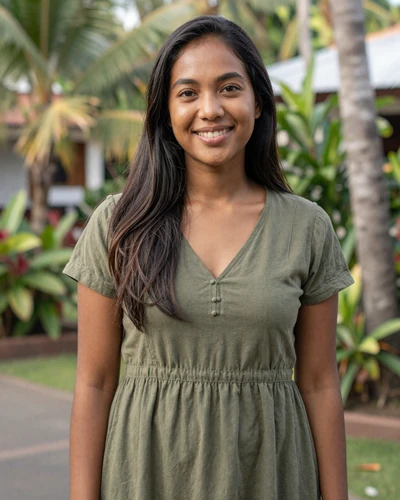
Lucia da Costa, 26
📍 Dili, East Timor
✓ Verified
Connect with resilient, warm-hearted Timorese women from Dili, Baucau, Maliana, and growing diaspora communities worldwide. Verified profiles, video chat, and culturally respectful matchmaking for men seeking genuine, committed love with East Timor singles.
Meet Timorese Singles
📍 Dili, East Timor
✓ Verified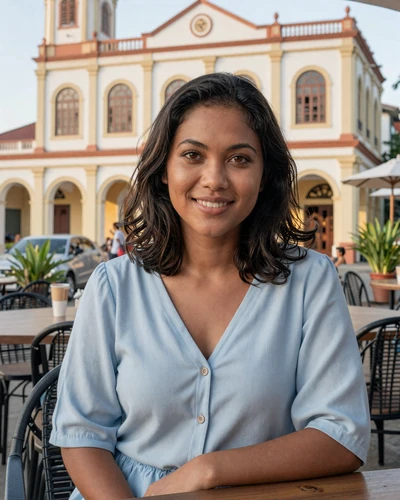
📍 Baucau, East Timor
✓ Verified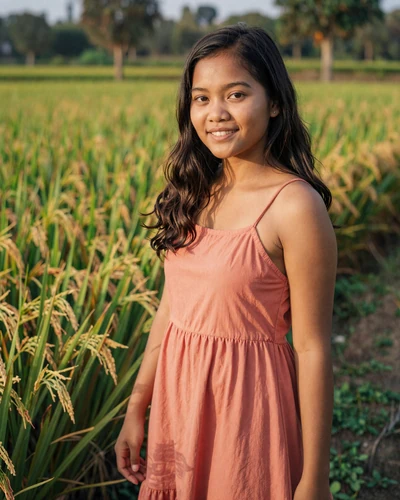
📍 Maliana, East Timor
✓ Verified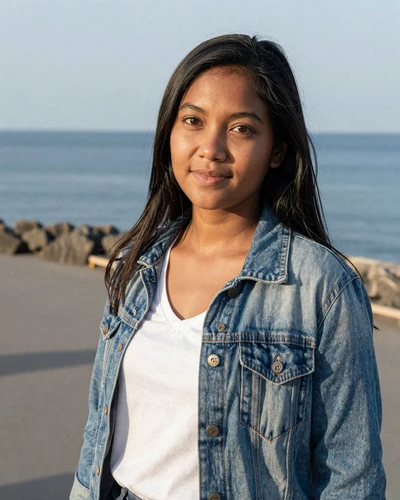
📍 Dili, East Timor
✓ Verified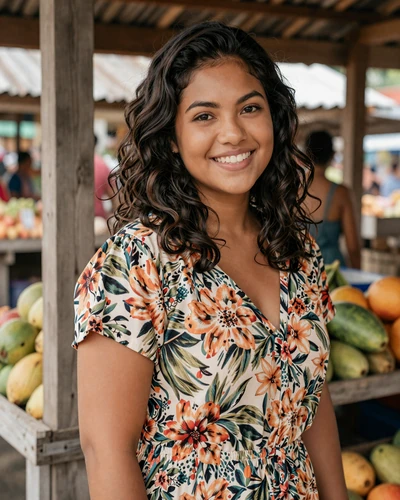
📍 Suai, East Timor
✓ Verified
📍 Darwin, Australia
✓ Verified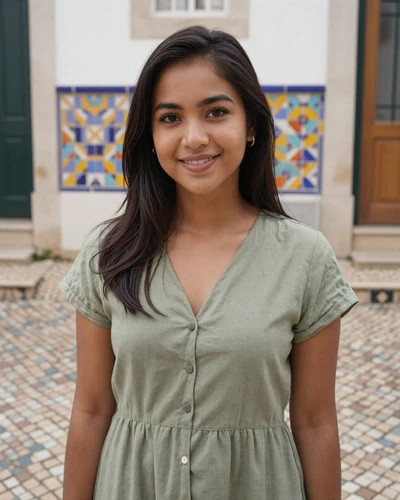
📍 Lisbon, Portugal
✓ Verified
📍 Dili, East Timor
✓ VerifiedTimorese women dating introduces Western men to women shaped by one of the world's most fascinating cultural fusions - a vibrant blend of Portuguese colonial heritage, deep Austronesian indigenous roots, and unwavering Catholic faith. East Timor (Timor-Leste), the youngest nation in Southeast Asia, gained full independence in 2002 after centuries of Portuguese colonization and a devastating 24-year Indonesian occupation. This history has forged a people - and especially its women - whose resilience, warmth, and commitment to community and family are nothing short of extraordinary. If you seek a partner whose loyalty runs bone-deep and whose spirit has been tempered by real-world strength, Timorese women offer a connection unlike any other in Asia.
East Timor sits on the eastern half of Timor island, just 640 kilometers northwest of Darwin, Australia, surrounded by the Banda and Timor seas. Despite its small size - roughly 1.3 million people - the nation contains remarkable cultural diversity. Over 30 indigenous languages are spoken alongside the two official languages, Portuguese and Tetum (a creole-influenced Austronesian tongue). This linguistic richness reflects the island's position at the crossroads of Melanesian, Austronesian, and European cultural influences, producing a population whose physical features, cultural practices, and worldview are genuinely unique in the Asian dating landscape.
Portuguese missionaries and traders arrived in Timor in the 16th century, leaving an indelible mark on the island's culture, religion, architecture, and naming conventions. Walk through Dili's older neighborhoods and you will see whitewashed colonial churches alongside traditional uma lulik (sacred houses) with their soaring thatched roofs. Timorese women carry Portuguese surnames - da Costa, Soares, Pereira, Gusmão, Alves - and many speak Portuguese alongside Tetum and their local mother tongue. This Portuguese connection creates a cultural bridge to Southern Europe that many Western men find immediately relatable and appealing.
Beneath this Portuguese overlay lies a rich Austronesian foundation. Traditional Timorese culture is built on intricate kinship networks, animistic spiritual practices that coexist with Catholic faith, and a profound connection to the land. The tais - East Timor's iconic hand-woven textile - is far more than decorative cloth; it represents family lineage, community identity, and the creative artistry of Timorese women. Each region of Timor-Leste produces tais with distinct patterns, colors, and symbolic meanings, and a woman who weaves tais is preserving a cultural heritage that stretches back millennia.
East Timor is the most Catholic nation in Asia, with approximately 97% of the population identifying as Roman Catholic. The Church played a critical role during the resistance to Indonesian occupation, providing sanctuary, education, and moral leadership when other institutions collapsed. For Timorese women, Catholic faith is not a passive Sunday observance - it is a living, daily framework that shapes their values around marriage, family, forgiveness, and community service. Mass attendance is high, religious holidays like Christmas, Easter, and the feast days of patron saints are celebrated with genuine communal joy, and the sacrament of marriage is treated with deep reverence.
This Catholic identity creates a natural point of connection for Western men from Christian backgrounds or those who respect faith-centered family values. Unlike some dating contexts where religion is a complication, Timorese women's Catholic faith often aligns naturally with Western men's expectations for a committed, monogamous, family-oriented partnership. Men who have explored Filipino women dating will recognize this Catholic cultural dynamic - the Philippines and East Timor share deep parallels in how faith shapes courtship, marriage, and family life.
East Timor's journey to independence forged a generation of women whose inner strength is remarkable. Timorese women face life's challenges with quiet determination and unwavering optimism, making them partners who stand beside you through any storm rather than retreating when difficulties arise.
With 97% of East Timor identifying as Catholic, Timorese women bring genuine faith into their relationships. They view marriage as a sacred, lifelong sacrament. Their values of forgiveness, compassion, and fidelity are lived daily - not just professed on Sundays - creating a moral foundation for lasting partnerships.
Timorese culture is built on tight-knit kinship networks and communal support systems. A Timorese woman does not love in isolation - she brings the warmth of her entire community into your life. Her loyalty extends from partner to family to village, creating a rich web of belonging and mutual care.
East Timor's digital landscape is undergoing rapid transformation in 2026, and this shift is opening entirely new possibilities for Timorese women seeking meaningful connections with Western men. As Southeast Asia's youngest nation, Timor-Leste has lagged behind its neighbors in internet infrastructure and smartphone adoption - but that gap is closing faster than most outsiders realize. Mobile internet penetration has grown significantly over the past five years, particularly in urban centers like Dili, Baucau, and Oecusse, where young Timorese women are increasingly comfortable navigating social media platforms, messaging apps, and online dating services.

While East Timor does not yet have the saturated dating app culture of neighboring Indonesia or the Philippines, this actually works in your favor. Timorese women who join international dating platforms are doing so with deliberate, serious intent - not for casual swiping or social media attention. The women you will find on our platform from East Timor are educated, motivated, and genuinely seeking cross-cultural relationships that lead to marriage and family. The relatively small but growing Timorese online dating community means less competition and more authentic connections for Western men who take the time to understand and appreciate East Timor's unique cultural identity.
Beyond East Timor itself, significant Timorese diaspora communities have established roots in Australia (particularly Darwin and Melbourne), Portugal (especially Lisbon and Porto), and smaller communities in the UK, Macau, and Indonesia. Diaspora Timorese women often hold professional positions, speak fluent English or Portuguese alongside Tetum, and navigate Western social norms with ease while maintaining deep emotional and cultural ties to their homeland. For Western men, diaspora Timorese women represent an especially accessible and rewarding dating opportunity - combining the cultural richness and family devotion of Timorese heritage with the practical advantages of geographic proximity and shared language.
The growing online dating culture in East Timor mirrors developments seen across Southeast Asia. Men who have explored connections with Indonesian women - East Timor's nearest neighbor - will recognize the importance of patience, cultural sensitivity, and genuine intent in building trust with women from this region. Similarly, Cambodian women dating shares parallels with the Timorese experience: both nations emerged from devastating conflict to produce women of remarkable resilience and family devotion within Southeast Asian cultural frameworks.
Understanding Timorese family and courtship traditions is essential for any Western man seriously pursuing a relationship with a Timorese woman. East Timor's approach to romance, engagement, and marriage is deeply communal - love is never a purely private matter between two individuals. It involves families, extended kinship networks, community elders, and the Church. Rather than seeing this as a complication, successful cross-cultural couples recognize it as one of the most beautiful aspects of Timorese relationships: you are not just gaining a wife - you are being welcomed into an entire community of people who will support, celebrate, and enrich your life together.
One of the most distinctive aspects of Timorese courtship is barlake - the traditional bride price exchange between families. Barlake is a reciprocal gift exchange system deeply rooted in Austronesian kinship structures. The groom's family presents gifts (historically including livestock, tais textiles, and sometimes monetary contributions) to the bride's family, who in turn provide gifts back. This is not a transaction or "purchase" - it is a sacred formalization of the union between two family lineages, a demonstration of respect, and a binding social contract that commits both families to supporting the marriage. The specifics of barlake vary by region and family, and in urban Dili and diaspora communities, the practice has become more symbolic and flexible. Open, respectful conversation with your partner about her family's expectations regarding barlake is important early in the relationship.
| Aspect | Traditional Timorese Courtship | Modern Online Dating Approach |
|---|---|---|
| Initial contact | Family intermediaries or community elders introduce suitable partners | Direct connection through dating platforms with honest, respectful first messages |
| Family involvement | Families negotiate and approve from the very beginning | Initial online connection is private, but family introduction remains a critical milestone |
| Barlake (bride price) | Formal exchange of livestock, tais, and gifts between families | Often symbolic or adapted; open dialogue about expectations is key |
| Religious ceremony | Catholic Church wedding is essential - civil marriage alone is insufficient | Church blessing remains important; pre-marriage counseling through the parish is expected |
| Courtship pace | Deliberate, community-witnessed, may take months to years | Can accelerate through video chat, but patience and consistency still earn deepest trust |
| Community celebration | Entire village participates in wedding festivities lasting multiple days | Community celebration remains a core expectation, even for diaspora couples |
For the vast majority of Timorese women, a Catholic Church wedding is not optional - it is the true marriage. A civil ceremony alone, without the Church's blessing, would be considered incomplete by most Timorese families. This means that Western men pursuing marriage with a Timorese woman should expect pre-marriage counseling through a Catholic parish, baptismal certificate requirements, and a full Church ceremony conducted in Tetum, Portuguese, or a combination of both. If you are not Catholic, the Church typically requires a dispensation for mixed-religion marriages - a process that is straightforward but requires advance planning and genuine respect for your partner's faith.
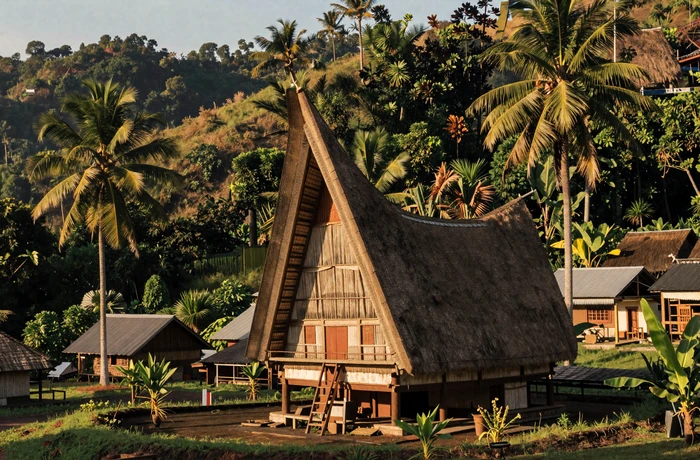
At the spiritual heart of traditional Timorese family life is the uma lulik - the sacred house. These elevated structures with distinctive peaked roofs serve as repositories of ancestral spirits, family heirlooms, and communal memory. Each extended family or clan maintains an uma lulik, and important life events - including marriages - often involve ceremonies at the sacred house. While urban and diaspora Timorese women may have a more relaxed relationship with uma lulik traditions, understanding their significance demonstrates a deep respect for Timorese cultural identity that will profoundly impress your partner and her family.
Register in under two minutes. Upload clear, genuine photos, describe your values and relationship goals, and indicate your interest in Timorese or Southeast Asian singles. No credit card required to start browsing.
Browse verified profiles of Timorese women from Dili, Baucau, and diaspora communities in Australia, Portugal, and beyond. Use advanced filters for location, age, education, and relationship preferences.
Send a thoughtful first message that shows genuine interest in her culture and story. Progress to video chat to build authentic trust. Our cultural guides help you navigate Timorese courtship with confidence and respect.
Success in Timorese women dating requires cultural awareness, emotional intelligence, and a genuine willingness to learn about one of Asia's most unique and underappreciated cultures. These six tips are drawn from the experiences of couples who have successfully navigated the beautiful complexities of cross-cultural love with East Timor women.

East Timor (Timor-Leste) is a small Southeast Asian nation occupying the eastern half of Timor island, located between Indonesia and Australia. The capital, Dili, is served by Presidente Nicolau Lobato International Airport with direct flights from Darwin, Australia (1 hour), Bali/Denpasar, Indonesia, and Singapore. Most Western travelers transit through Bali or Darwin. A tourist visa on arrival is available for US, Australian, and most European passport holders for stays up to 30 days.
Respect for Catholic faith, family, and community are the three pillars. Timorese courtship involves family approval, the barlake (bride price) tradition, and a Catholic Church wedding. Public displays of affection are generally modest outside urban Dili. Addressing her parents with formal respect, showing genuine interest in her cultural heritage, and demonstrating patience throughout courtship are essential signals of your seriousness and character.
The official languages are Portuguese and Tetum. English proficiency is growing among university-educated younger Timorese women, particularly those studying or working in Dili and diaspora communities in Australia and the UK. Diaspora Timorese in Australia typically speak fluent English. For homeland connections, basic Tetum or Portuguese phrases, combined with translation tools, will bridge the language gap effectively while showing cultural respect.
Yes. Approximately 97% of Timorese are Catholic, and faith is deeply woven into daily life and family decisions. Most Timorese women expect a Catholic Church wedding. If you are not Catholic, the Church can issue a dispensation for mixed-faith marriages, but genuine respect for her faith - attending Mass, understanding religious traditions - is non-negotiable for building trust with her and her family.
Barlake is the traditional Timorese bride price system - a reciprocal gift exchange between families that formalizes the marriage alliance. Gifts historically include livestock, tais textiles, and monetary contributions. In modern Dili and diaspora settings, barlake has become more symbolic and negotiable. Discuss expectations openly with your partner early in the relationship. Approaching barlake with respect and willingness - rather than resistance - demonstrates the cultural humility Timorese families deeply value.
East Timor is generally safe for Western visitors, with Dili being a calm and welcoming capital. Petty crime exists as in any developing country, so standard travel precautions apply - avoid walking alone at night in unlit areas, secure valuables, and use reputable transportation. The Timorese people are known for their extraordinary hospitality toward foreigners. Check your government travel advisory before visiting and register with your embassy. Many couples arrange first meetings in Darwin, Australia as a convenient halfway point.